When it comes to origins of life (Ool) hypotheses, we are often served with beautiful stories on how one event follows another and then you get life. But, the devil is always in the details and we want it to be out, to be known and to be addressed.
-Robert Shapiro (1935 – 2011)
Here is a summary of my recent paper addressing a weakness in the metabolism first hypotheses in hydrothermal vents.
Thioesters, the prebiotic analogues of Acetyl coenzyme A is a linchpin organic compound in respiration processes in life. Its occurrences have been transposed into geochemical settings such as hydrothermal vents to form many metabolism first schemes for origins of life in the last 40 years or so. One glaring problem, despite the usual poised narration, is that, this hypothesis have survived so long without through investigations for that many years. Now, researchers at Earth-Life Science Institute (ELSI), an institute incepted to exclusively study the origins problem is doing just that, to set constrains on current OoL models and to produce more experimentally driven principles to understand the origins of life.
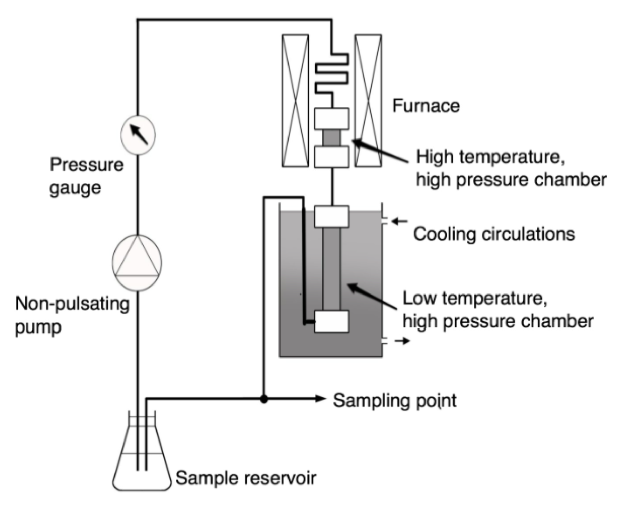
The open-source paper available in Sci.report, has demonstrated that the accumulated concentration of thioesters in HT vents are too insignificant to launch any meaningful progression in metabolism first schemes. Additionally, thioester (like Acetyl-Co-A) has a very limited shelf life; the researchers measured the decay rate and concluded that, depending on thioesters speciation and physical conditions, they are unlikely to persist in hydrothermal vent conditions for long, thus constraining the metabolism first hypotheses.
p.s: We are extremely delighted to get this piece out in an open source journal.
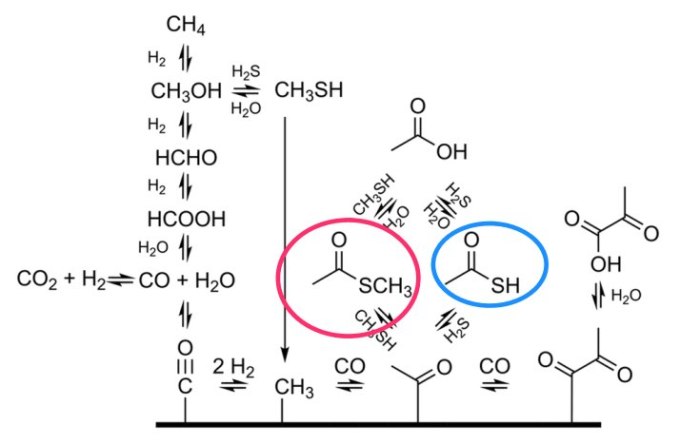
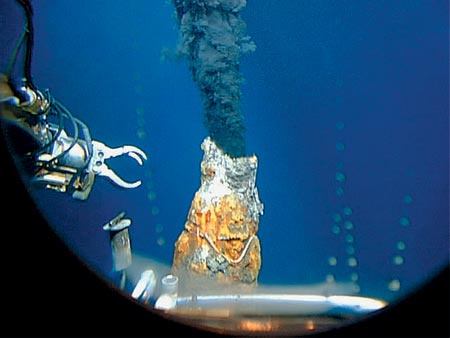
Figure is showing the possible formation of thioacetic acids, in blue and thioesters (methyl thioacetic acid) , in pink in hydrothermal vent systems.
Reference
Title: The Abiotic Chemistry of Thiolated Acetate Derivatives and the Origins of Life
Journal: Scientific Reports, 2016


 「日本での研究はスピードが速くて刺激的。その上、ELSIには第一線の研究者が集まっているから、知りたいことがあればすぐに聞きに行ける。この環境はとても貴重です」と話すのは、ELSI若手研究員 のクーハン・チャンドゥルー。「原始地球で、どのようにして生命誕生につながる生体分子ができたのか」に迫ろうと、自らが中心となって新たな実験を準備中だ。

 「生体分子が生成すれば、生命が成り立つわけではありません。生体分子の1つである脂質は、細胞膜など構造にならなくてはなりませんし、その中で代謝といったエネルギー変換が行われ、自己複製ができるようになって初めて生命だからです。細胞膜や代謝にももちろん興味はあります。しかし、生体分子ができなければ生命は誕生しない。私がやろうとしているのは、生命誕生のごく最初に起こった出来事の解明なのです」。チャンドゥルーの実験計画は、生命誕生の謎に迫るものだとして、平成27年度の笹川科学研究助成を受けることになった。




 Kuhan Chandru
You must be logged in to post a comment.