How do scientists study and gain new knowledge about our biological past?
There are many different approaches that scientists use to study the origins of life. Here are a few examples:
- Experimental simulations (what I do): Scientists can conduct experiments to simulate the conditions that may have existed on early Earth and study the chemical reactions that may have led to the emergence of life. These experiments can be conducted in the laboratory using various techniques, such as chemical synthesis or irradiation with UV radiation.
- Analysis of meteorites and comets (what I like): Scientists can study meteorites and comets to understand the types of chemical reactions that may have occurred in the early solar system and to search for evidence of the building blocks of life.
- Astrobiological exploration (what I am curious about): Scientists can explore other planets and moons in our solar system and beyond to search for evidence of past or present life and understand the conditions necessary for life to emerge and evolve. For example, the recent James Webb Space Telescope.
- Theoretical modeling (what I can’t do): Scientists can use computer simulations and mathematical models to understand the conditions and processes that may have been necessary for the emergence of life on Earth and to test different hypotheses about the origins of life.
Overall, the study of the origins of life is a multidisciplinary field that combines elements of biology, chemistry, physics, and other scientific disciplines to understand the conditions and processes necessary for the emergence of life on Earth.
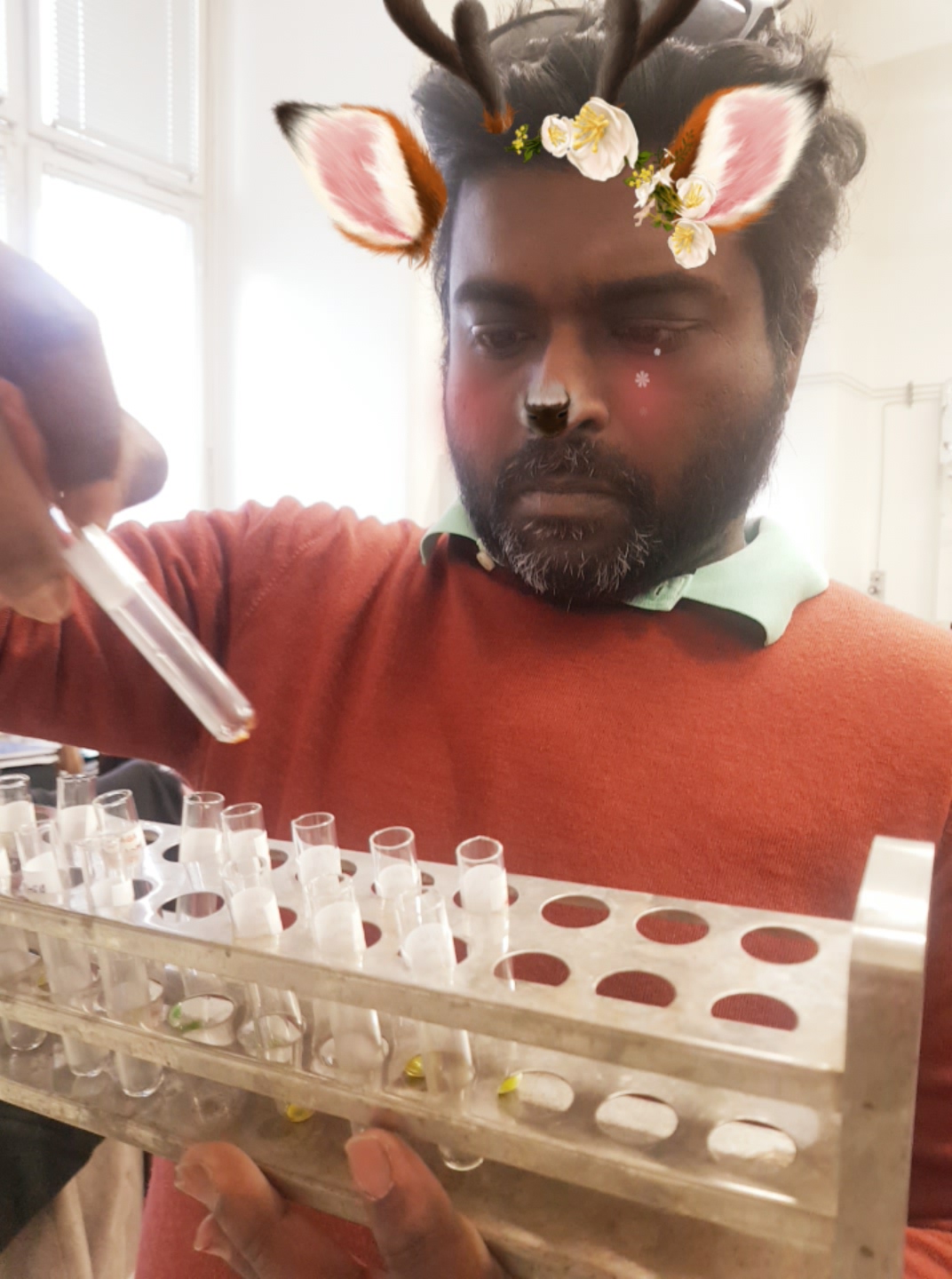

 Kuhan Chandru
You must be logged in to post a comment.